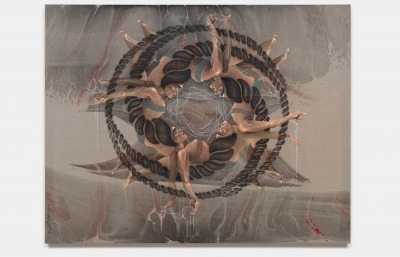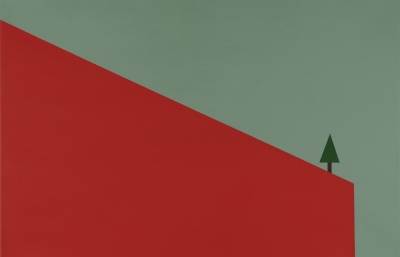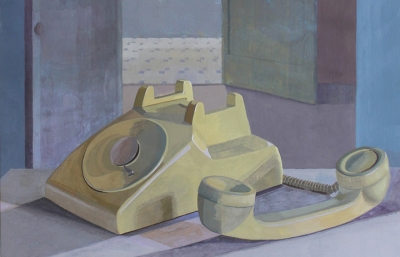


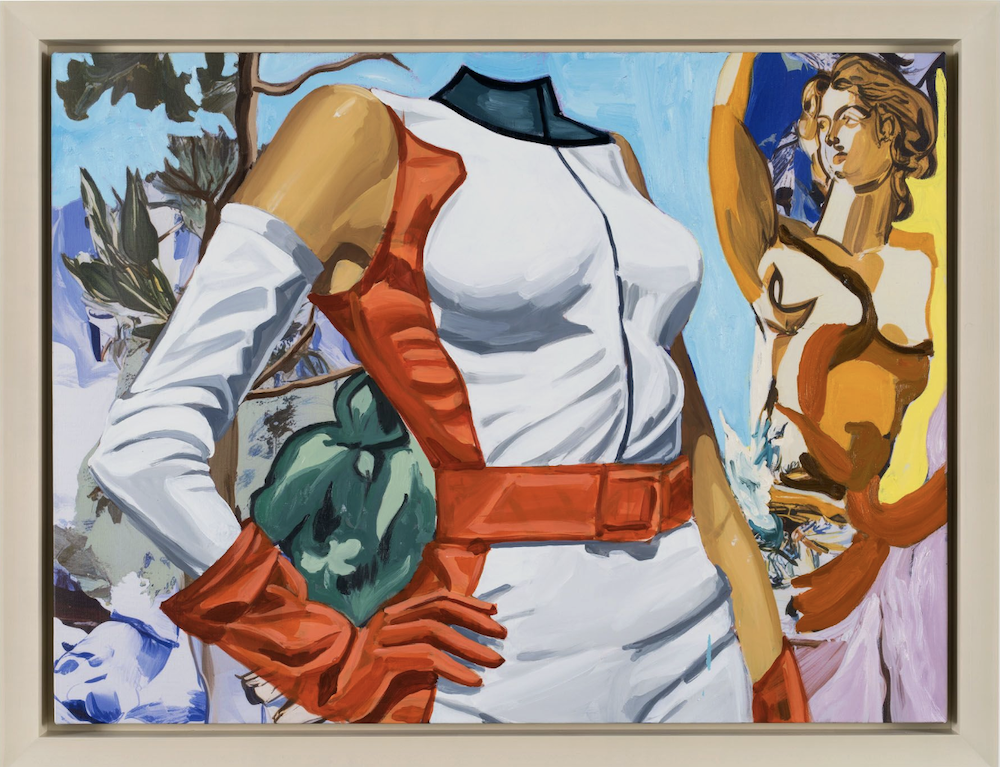
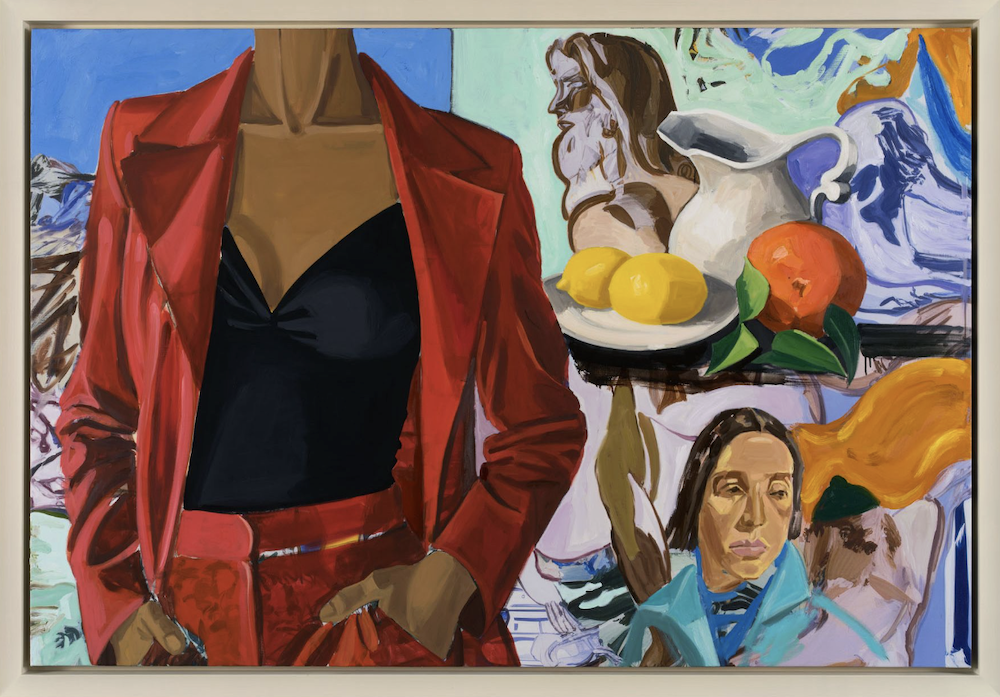
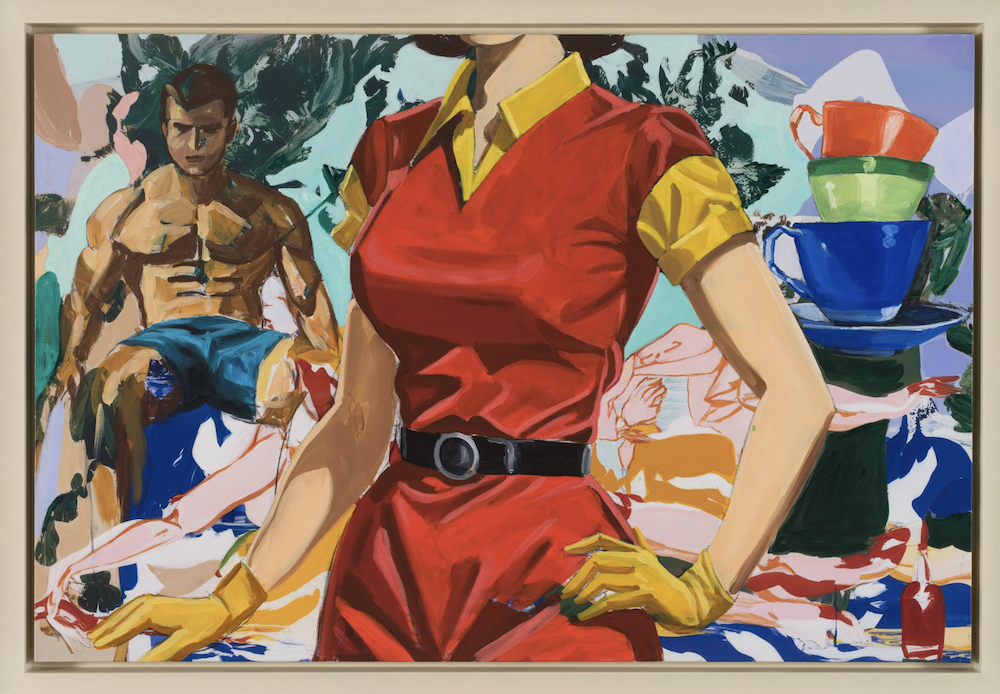
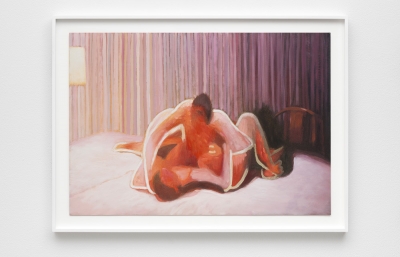
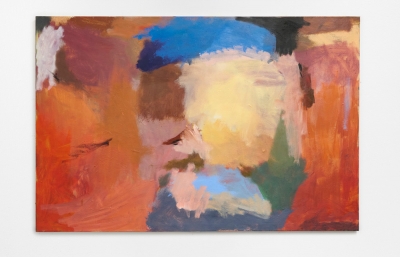
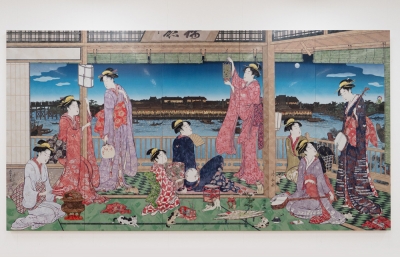
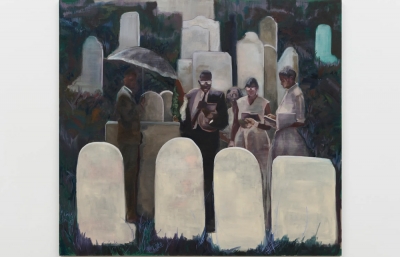
One of the leading postmodern painters of the last fifty years, David Salle’s art is one of juxtaposition, and his artistic “style” is the integration of disparate, contrasting styles. Since the 1980s, Salle has plucked compelling imagery from art history, print advertising and, most extensively, his own photographs. He uses this source material to create novel and provocative mis-en-scènes that he revitalizes in paint. Salle’s creative method is to react to certain “givens”; to enter into a visual call-and-response with them. This aspect of his work is akin to the way certain painters at mid-century, notably Robert Rauschenberg and Jasper Johns, incorporated found objects into their paintings; the American flag or bits of urban detritus were the “givens” to which Rauschenberg and Johns responded.
The paintings in My Frankenstein continue Salle’s investigation into how machine learning can integrate with traditional painterly techniques. For the past few years, Salle has worked with an engineer to create a generative, proprietary AI model trained on aspects of his own oeuvre, feeding it a tightly edited selection of his past works and prompting it to generate new image configurations. The AI’s weird, counterintuitive reimaginings of Salle’s original paintings have become the new “givens” in this most recent body of Salle’s work.
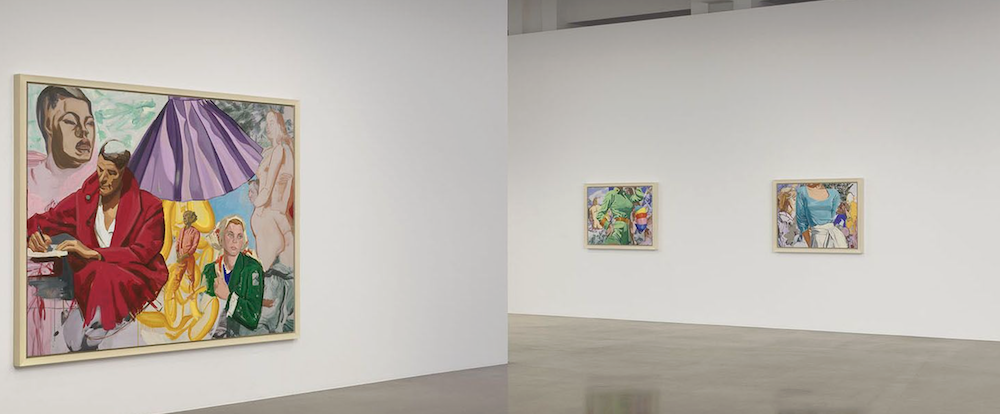
The AI compositions form pixelated backgrounds, enlarged and printed on canvas, onto which the artist imposes a new layer of painted imagery. Salle has selected, altered, and repainted each one at will, in a dramatic compositional repartee between himself and a machine model of his own making. In Morning, references to traditional artistic genres including still life, landscape, live-model drawing and history paintings abound at the edges and intersections of each canvas, a sort of metaphysical glue holding the compositions together.
The exhibition’s title, My Frankenstein, reflects the artist’s recognition of the conflict inherent in his embrace of this new, still-evolving technology. A potent metaphor for the unintended consequences of scientific ambitions, Mary Shelley’s novel Frankenstein cautions against blind faith in one’s beliefs and methods—or in any prescriptive methodology.
The Frankenstein-like suturing of imagery is also illustrated in the painting Master and Margarita (2025), which, like the exhibition’s title, takes the name of a celebrated novel—in this instance Mikhail Bulgakov’s early-twentieth-century satire of the Soviet state.
Salle’s dynamic creative process yields paintings that have the expansive energy of all-over abstraction, but achieved with the use of representational imagery. His alternating collaboration and antagonism with his own AI model resolves into compositions that are propulsively rhythmic, sensorially complex and highly emotive. Each one visually embodies the central question of our time: Who’s ahead, humans or machine?